
Blog

Chevy Tire Pressure Guide | Recommended PSI for Every Model

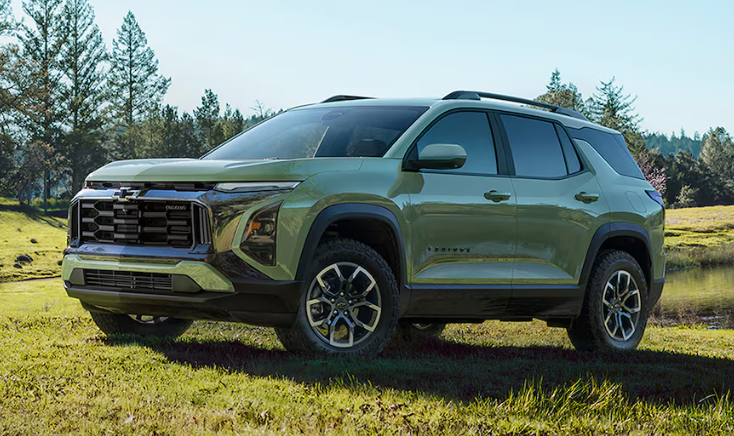
2026 Equinox in green

Tire pressure is one of those things most drivers ignore until something goes wrong. But staying on top of it is genuinely one of the easiest ways to protect your Chevy, your wallet, and your safety. Whether you're hauling gear in a Silverado 1500 or running school drop-offs in a new Equinox EV, knowing the right PSI for your specific model makes a real difference in how your tires perform and how long they last. If you'd rather let a professional handle it, you can schedule a tire service appointment with our team at Turan-Foley Chevrolet Buick.

This guide covers every major 2026 Chevy model, explains where to find your recommended specs, and walks you through what to do when that Tire Pressure Monitoring System (TPMS) light comes on.

Why Correct Tire Pressure Matters for Your Chevy

Running tires at the wrong pressure creates problems that compound quietly over time. An underinflated tire flexes more with every rotation, building heat and wearing rubber unevenly along the outer edges. An overinflated tire rides on a smaller contact patch, reducing grip and chewing through the center tread faster than it should.

Both extremes hurt fuel economy. Tires running below the recommended pressure level can force the engine to burn up to 3% more fuel due to increased rolling resistance. Correct pressure keeps your Chevy handling predictably, braking responsively, and burning fuel efficiently.

Where to Find Your Chevy's Recommended PSI (Not the Tire Sidewall)

A common mistake is reading the PSI number stamped on the tire sidewall and treating it as the target. That number is the maximum pressure the tire can safely hold, not the pressure your vehicle is designed to run. Inflating to the sidewall max will almost certainly result in overinflation.

Your Chevy's actual recommended tire pressure lives in two places. First, check the sticker inside the driver-side door jamb, which lists the correct front and rear PSI for your specific model and trim. Second, your owner's manual covers this too, including any variations for towing or heavy load configurations. Those are the only numbers you should rely on. This guide reflects 2026 baseline specs, so always confirm against your door placard before inflating.

Understanding the Chevy TPMS Warning Light

Every modern Chevy comes with a TPMS. Sensors inside each wheel monitor real-time pressure and alert you when something drops below the threshold. One detail a lot of drivers miss: the TPMS warning light typically doesn't trigger until you're around 25% below the recommended PSI. Your tires can be meaningfully underinflated before any warning appears. A monthly manual check with a gauge is really the only reliable way to catch gradual pressure loss early.

When the light does come on, check all four tires with a gauge and inflate accordingly. If it stays on after you've corrected the pressure, a sensor may need servicing. Our tire inspection and TPMS service team can diagnose and reset the system during a routine visit.

2026 Chevy Recommended Tire Pressure by Model

The table below reflects Chevrolet's 2026 baseline specifications. Use it as a quick reference, then confirm your exact PSI on the driver-side door placard or in your owner's manual.

ModelRecommended PSINotes
Trax35 PSIFront and rear
Trailblazer35 PSIFront and rear
Equinox35 PSIAll trims; some trims may allow up to 38 PSI depending on tire size, verify on door placard
Equinox EV35 PSISame as gas model despite EV drivetrain
Blazer35 PSIBaseline; confirm trim-specific variation on door placard
Blazer EV35 PSIBaseline; confirm trim-specific variation on door placard
Traverse35 PSIFront and rear
Tahoe35 PSIBase trim: 275mm tires, 55% aspect ratio
Suburban35 PSIFront and rear
Colorado35 PSI265mm tires, 70% aspect ratio
Silverado 150035 PSIStandard load; higher load/towing: confirm on door placard
Silverado 250060-75 PSIVaries by configuration and payload
Silverado 350060-80 PSIVaries by configuration and payload
Silverado EV61 PSIElevated due to battery pack weight
Corvette (all variants)30 PSIStingray: 245mm/40%; Z06: 285mm/30%; Stingray Z51 Package: 245mm/35%; all require 30 PSI

2026 Chevy Tire Pressure Considerations by Model

Compact SUVs: Trax and Trailblazer

Both the Trax and Trailblazer call for 35 PSI across all four tires. Straightforward enough, but the door placard is still the definitive reference since wheel size can vary slightly by trim. Keeping these compact SUVs properly inflated preserves the responsive handling and fuel efficiency they're built for.

Midsize SUVs: Equinox, Equinox EV, Blazer, and Blazer EV

The Equinox runs at 35 PSI across most trims, though some configurations allow up to 38 PSI depending on tire size. Check your door placard to confirm which applies to your build. The Equinox EV holds the same 35 PSI as the gas model, which surprises some EV owners who expect the battery pack's added weight to change things. The Blazer and Blazer EV follow the same 35 PSI baseline; verify any trim-specific differences on your door placard.

Full-Size SUVs: Traverse, Tahoe, and Suburban

The Traverse, Tahoe, and Suburban all use 35 PSI as a starting point. The Tahoe's base trim is fitted with 275mm tires at a 55% aspect ratio. When you're loading up one of these big SUVs for a road trip, the rear tires absorb more stress, and your owner's manual may recommend adjusting rear pressure accordingly. Stability at highway speeds depends on tires that are properly inflated, full stop.

Trucks: Colorado, Silverado 1500, Silverado HD, and Silverado EV

Truck tire pressure is where things get genuinely complex. The Colorado uses 35 PSI on 265mm tires with a 70% aspect ratio. The Silverado 1500 also runs 35 PSI under standard load, but towing or carrying heavy cargo can require a different spec. Check your door placard for the load-rated value, which also depends on whether your tires are LT or P-metric.

The Silverado 2500 and 3500 involve a significant jump: 60-75 PSI and 60-80 PSI respectively, depending on configuration and payload. That range is intentional. Heavy-duty trucks are rated to haul and tow substantially more weight, and their tires are engineered to handle it only when inflated to spec.

The Silverado EV runs at 61 PSI, elevated specifically to account for the battery pack's extra weight compared to gas models. For any Silverado variant, treat the door placard and owner's manual as required reading before you add air.

Corvette: Stingray, E-Ray, Z06, ZR1, and ZR1X

All Corvette variants call for 30 PSI, despite real differences in tire size across trims. The Stingray uses 245mm tires at a 40% aspect ratio; the Z06 runs 285mm tires at 30%; the Stingray Z51 Package uses 245mm at 35%. Some variants use staggered front and rear sizes, so these spec differences matter when you're standing at the valve. The E-Ray's hybrid drivetrain adds weight that factors into the setup as well. With any Corvette, the owner's manual isn't optional.

How to Check and Adjust Tire Pressure on Your Chevy

Always check tire pressure when the tires are cold, meaning before driving or after the vehicle has been parked for at least three hours. Driving heats the air inside and raises the reading, giving you a false high number.

Remove the valve cap, press a gauge firmly onto the valve stem, and compare your reading to the door placard. If the tire is low, add air in short bursts and check frequently. If it's overinflated, press the center pin on the valve stem to release air slowly. Check all four tires and your spare while you're at it.

One thing worth remembering: even a severely underinflated tire can look perfectly fine to the naked eye. Only a gauge tells you what's actually going on.

How Often Should You Check Your Chevy's Tire Pressure

Check tire pressure monthly and before any long road trip. Tires naturally lose about 1 PSI per month under normal conditions, and temperature swings speed that up. For every 10°F drop in ambient temperature, pressure falls by roughly 1 PSI.

This matters especially on the Mississippi Gulf Coast, where summer heat pushes into the upper 90s and seasonal swings are real. Gulf Coast heat causes pressure to rise; cooler months pull it back down. Drivers in the Gulfport area should check monthly year-round and pay close attention during seasonal transitions. Check any time you're hauling heavier loads than usual too, which applies directly to Silverado and Suburban owners who tow regularly.

Visit Turan-Foley Chevrolet for Tire Pressure and TPMS Service

When to Bring It to Us

Getting tire pressure right on your own is completely doable. That said, some situations really do call for professional attention. If your TPMS light keeps returning after you've inflated your tires, a sensor may be failing. Uneven tread wear is another sign that a rotation and pressure reset from a trained technician could extend your tire life significantly. And if you're not sure which PSI applies to your specific trim, a quick visit removes the guesswork entirely.

Serving Gulfport and the Mississippi Gulf Coast

We serve Gulfport, MS and the surrounding Gulf Coast communities, including Biloxi, Long Beach, and Bay St. Louis. Our factory-trained service team handles tire pressure checks, rotations, full TPMS diagnostics, and sensor replacement using genuine GM parts.

Schedule Service or Contact Our Team

Whether you're maintaining a new Silverado 1500, a pre-owned Equinox, or a Corvette that needs performance-spec tire care, we're here to help. Schedule a tire service appointment online, or contact us if you'd prefer to call or message our team directly. You'll find us at 11123 Hwy 49N, Gulfport, MS 39503.
Recommended Posts

2026 Chevrolet Trailblazer parked in front of water

Chevy SUVs by Size: Smallest to Largest

Picking a Chevy SUV sounds simple until you realize just how many options are on the table. The Chevrolet SUV lineup runs from a city-friendly compact all the way up to a full-size hauler that seats up to nine passengers. If you're trying to figure out which model actually fits your life, starting with size is the smartest move. We've ranked the full 2026 gas SUV lineup in order of overall length to help you shop smarter before your visit to Turan-Foley Chevrolet Buick in Gulfport. more How Chevrolet Sizes Its 2026 SUV Lineup The 2026 Chevrolet SUV lineup covers seven distinct body sizes, with total lengths running from 174.0 inches up to 226.3 inches. That's more than four feet of difference between the two ends of the lineup, which tells you a lot about how seriously Chevy approaches variety. Whether you need something that slides into a tight downtown Gulfport parking garage or a vehicle that can carry the whole team plus gear for a Gulf Coast road trip, there's a model built for exactly that. Worth knowing before you start shopping: the Trailblazer is actually shorter than the Trax, despite the Trax often being positioned as the entry-level option. At 174.0 inches versus the Trax's 178.6 inches, the gap is modest, but it does change how you think about the two vehicles. Knowing where each model falls helps you shop with real confidence. The Smallest Options: Trailblazer and Trax Chevy's two smallest SUVs share a lot of DNA but serve slightly different buyers. Both prioritize everyday practicality and won't intimidate you in a crowded parking lot. The difference comes down to interior packaging, personality, and how you plan to use the vehicle day to day. Chevy Trailblazer (174.0 in.): Best for City Living The Trailblazer is the shortest gas SUV in the current lineup. At 174.0 inches long, it's the easiest to park, the most comfortable in stop-and-go traffic, and still feels spacious enough inside for daily errands and weekend trips. With up to 54.4 cu ft of cargo space with the rear seats folded, it doesn't sacrifice function to stay compact. If you're commuting solo or with one passenger most of the time, the Trailblazer hits a sweet spot between footprint and function that's hard to beat. Chevy Trax (178.6 in.): Small Footprint, Big Interior Efficiency The Trax sits 4.6 inches longer than the Trailblazer and is Chevy's most affordable SUV. Chevy engineers put that extra room to good use inside the cabin, and the Trax feels roomier than its exterior dimensions suggest, with thoughtful storage and a seating layout that works well for small families. With up to 54.1 cu ft of cargo space, it delivers strong practicality per square inch. For first-time SUV buyers or anyone stepping up from a compact sedan, the Trax offers an accessible entry into the Chevrolet SUV lineup without a steep learning curve. The Middle Ground: Equinox and Blazer Once you move into midsize SUV territory, cargo capacity becomes more meaningful and the overall experience shifts toward comfort and capability. The Equinox and Blazer both occupy this space but serve noticeably different audiences. Chevy Equinox (183.2 in.): The Practical Family Compact At 183.2 inches, the Equinox is a five-passenger, two-row SUV that delivers midsize-level livability in a manageable package. It's Chevrolet's most popular SUV for good reason. With up to 63.5 cu ft of max cargo, it balances rear passenger space, cargo room, and driver technology in a way that handles school runs, grocery hauls, and weekend road trips without being a burden to park. It's the kind of vehicle that earns loyalty because it handles daily life exceptionally well. Chevy Blazer (191.8 in.): A Sporty Two-Row Option With a Time Stamp The Blazer stretches to 191.8 inches and brings a distinctly sportier personality to the midsize segment. Where the Equinox leans practical, the Blazer leans bold, with a wider stance, angular styling, and a performance-tuned suspension aimed at drivers who want their SUV to feel like an event. It offers up to 64.2 cu ft of cargo space with the rear seats folded, and its two-row layout keeps the profile sleek, though growing families who need a third row should look at the Traverse instead. One timely note: the 2026 gas Blazer is confirmed in production, but GM is not expected to continue it past MY2026. If the Blazer's style and size speak to you, now is the time to schedule a test drive before availability narrows. Going Full-Size: Traverse, Tahoe, and Suburban Chevrolet's full-size SUVs represent a different category of capability altogether. The Traverse, Tahoe, and Suburban are engineered for maximum passenger count, serious towing, and the kind of cargo space that eliminates compromise. Each has a distinct role. Chevy Traverse (204.4 in.): The Three-Row Sweet Spot At 204.4 inches, the Traverse is the most accessible entry point into Chevy's full-size SUV options. Built on a car-based platform rather than a truck frame, it delivers a smooth, crossover-like driving experience with room for seven or eight passengers and up to 97.6 cu ft of max cargo. The third row is genuinely usable for adults on shorter trips, and the overall capacity easily handles family vacations without a rooftop carrier. For families who've outgrown the Equinox but don't need a truck-based platform, the Traverse hits a real sweet spot. Chevy Tahoe (211.3 in.): Truck-Based Muscle for Big Families The Tahoe is where the Chevrolet SUV lineup transitions to truck-based construction. At 211.3 inches, it's built on the same platform as the Silverado, which means the chassis handles real loads with authority. It seats seven to nine passengers and offers up to 122.7 cu ft of max cargo. For families who haul boats, trailers, or campers along the Gulf Coast, the Tahoe opens up towing capabilities a crossover simply can't match, while still working comfortably as a daily driver. Chevy Suburban (226.3 in.): Maximum Space, No Compromises The Suburban measures 226.3 inches from bumper to bumper, making it the largest Chevy SUV in the lineup. It shares its truck-based architecture with the Tahoe but adds a longer wheelbase that dramatically increases both rear passenger space and cargo capacity. With up to 144.7 cu ft of max cargo and seating for seven to nine passengers, the Suburban simply eliminates compromise. Families with a lot of people, a lot of gear, or both will find nothing else in this lineup comes close. A Quick Note for EV Shoppers: Equinox EV and Blazer EV For buyers interested in going electric, Chevrolet also offers the Equinox EV and Blazer EV. Both carry over the familiar footprints and interior layouts of their gas-powered counterparts, so you won't be sizing up or down to go electric. If you're weighing EV options within the 2026 Chevrolet SUV lineup, contact our team and we can walk you through both models alongside their gas counterparts. Matching Chevy SUV Size to Your Lifestyle The right Chevy SUV size comes down to your daily reality. Use the table below to see where each model lands based on the most common use cases: Lifestyle Need Recommended Model Overall Length Key Feature City Driving Trailblazer 174.0 in. Easiest to park; up to 54.4 cu ft cargo Small Families Trax 178.6 in. Most affordable; up to 54.1 cu ft cargo Growing Families Equinox 183.2 in. 5-passenger two-row; up to 63.5 cu ft cargo Sporty Style Blazer 191.8 in. Two-row; up to 64.2 cu ft cargo Three-Row Space Traverse 204.4 in. 7–8 passengers; up to 97.6 cu ft cargo Towing & Power Tahoe 211.3 in. Truck-based; 7–9 passengers; up to 122.7 cu ft cargo Maximum Cargo Suburban 226.3 in. Largest in lineup; up to 144.7 cu ft cargo This table covers the full 2026 gas lineup so you can see at a glance where each model lands before you ever step on the lot. Come See the Full 2026 Chevy SUV Lineup at Turan-Foley Chevrolet in Gulfport Reading about dimensions only gets you so far. The real test is sitting in the driver's seat, loading your family into the back, and actually feeling the difference between a 174-inch Trailblazer and a 226-inch Suburban. At Turan-Foley Chevrolet Buick in Gulfport, we carry the full range of 2026 Chevy SUV models and have been helping Mississippi Gulf Coast families find the right vehicle for over 50 years. Our team can walk you through every option by size in person, whether you're after something city-sized or a full-size hauler for a household that keeps growing. Stop by at 11123 Hwy 49N, Gulfport, MS 39503, and find out firsthand which Chevy SUV fits your life best.

2026 Silverado in blue

What is Chevy's TurboMax Engine?

Chevrolet has been quietly rewriting the rulebook on what a truck engine should look like. The Chevy TurboMax sits at the center of that story: a turbocharged four-cylinder that punches well above its weight and is now standard equipment across some of Chevy's most popular truck models. If you're curious about the buzz surrounding it, this is a straightforward look at what it is, what it can do, and whether it makes sense for your next truck. You can browse our current TurboMax-equipped inventory to see what's available right now at Turan-Foley Chevrolet. more What Is the Chevy TurboMax Engine? The TurboMax is a turbocharged 2.7L inline-four built specifically for truck duty. Based on the L3B engine platform, it was officially branded "TurboMax" starting with the 2024 model year. Chevrolet engineered it with direct injection and variable valve timing, but what makes it unusual for a four-cylinder is its construction. The TurboMax uses a fully forged bottom end and a strengthened block, the kind of diesel-like internals that give it durability well beyond what you'd expect from a passenger-car engine. It was built from the start to handle the demands of truck ownership. The TurboMax also reflects a broader shift happening across the truck segment. Buyers want capable powertrains that don't drain the tank on every commute. This engine answers that call by pairing modern forced-induction technology with a lighter, more compact architecture than a traditional V8. Power and Torque: The Numbers Shoppers Actually Care About Raw specs tell a real story here. The TurboMax produces 310 hp and 430 lb.-ft. of torque, with that torque peaking at 3,000 rpm. Those aren't midsize-car numbers. It delivers more horsepower than Chevrolet's 3.6L V6 and more torque than any V6 option in the Silverado 1500 lineup, making it the highest-torque engine in that lineup. What makes those numbers especially useful is how they're delivered. Turbocharged engines generate peak torque much earlier in the RPM range than naturally aspirated engines, which means you feel the power the moment you press the accelerator. That characteristic makes real-world driving feel strong and confident whether you're merging onto the highway, pulling out of a job site, or working through Gulf Coast traffic with a loaded bed. Why the Low-End Torque Is the Real Story The TurboMax's strong low-RPM output isn't accidental. Three engineering decisions work together to produce it. Turbocharging forces more air into the combustion chamber, increasing power output without adding displacement. Active Fuel Management (cylinder deactivation) allows the engine to drop to two cylinders under light loads, improving efficiency without sacrificing response when you need it. And the forged internals, borrowing the same construction philosophy from diesel engines, allow the block to handle sustained high-torque output without the wear you'd eventually see in a more lightly built engine. These features explain why the TurboMax feels more like a V8 off the line than a four-cylinder. Why TurboMax Torque Makes Sense for Hauling, Towing, and Work-Truck Duty Torque is the metric that actually moves things. Horsepower gets the headlines, but torque is what pulls a loaded trailer off a dead stop and keeps a work truck from straining on an incline. The TurboMax's 430 lb.-ft. arrives early and holds strong, which is exactly what you want in a working vehicle. In the 2026 Silverado 1500, Chevrolet rates the TurboMax at a maximum towing capacity of up to 9,500 lbs. and a maximum payload of up to 2,260 lbs. (figures vary by cab style, drivetrain, and payload package). That puts it well within range for legitimate work-truck duty, whether you're hauling equipment, towing a boat, or managing job-site loads without stepping up to a larger V8. The engine's low-RPM grunt means less stress on the drivetrain and smoother starts when you're fully loaded. For anyone who uses their truck as a tool rather than just transportation, the TurboMax holds its own in everyday work scenarios along the Gulf Coast and beyond. The 2026 Chevy Silverado 1500 and the TurboMax Engine For 2026, Chevrolet continues a significant call: the TurboMax is the standard powertrain across the core Silverado 1500 trims. That decision means buyers get a genuinely capable engine right from the base configuration rather than treating a four-cylinder as a compromise spec only budget shoppers would consider. Which Silverado 1500 Trims Come Standard with TurboMax? The TurboMax spans a wide range of the Silverado lineup. Standard-equipped trims include the Work Truck (WT), Custom, Custom Trail Boss, LT, RST, and LT Trail Boss. That's broad coverage. You get the same modern, high-output engine regardless of which trim you choose. New for 2026 is the RST Select package, offered exclusively with the TurboMax, which adds 20-inch black wheels, all-terrain tires, assist steps, a bedliner, and all-weather floor mats. Fuel economy for the 2026 Silverado 1500 with the TurboMax is EPA-estimated at 20 city / 23 highway / 21 combined MPG for 2WD, and 18 city / 21 highway / 19 combined MPG for 4WD. Those numbers are worth factoring into your total cost of ownership, especially for buyers who put real miles on their trucks. If your priorities are daily commuting with the ability to tow on weekends, the LT or RST gives you that balance. If you need a capable work truck that can take you off-road without breaking a sweat, the Custom Trail Boss or LT Trail Boss adds suspension lift, skid plates, and all-terrain tires, all with the same 310 hp / 430 lb.-ft. TurboMax underneath. You can schedule a test drive to feel the difference between configurations firsthand. The 2026 Chevy Colorado and the TurboMax Engine The Colorado and TurboMax pairing is equally worth noting. For the 2026 model year, the TurboMax is the only powertrain option across all Colorado trims, which says a lot about Chevrolet's confidence in it. There's no V6 alternative available. The same output figures apply: 310 hp and 430 lb.-ft. of torque. Maximum towing for the 2026 Colorado with TurboMax reaches up to 7,700 lbs. when properly equipped with the Advanced Trailering Package. The Colorado is built for versatility. It's easy to handle in the city, capable enough for weekend off-roading or camping hauls, and well-suited for drivers who want a truck without the footprint of a full-size. The TurboMax's torque profile and efficiency fit that mission well. For Gulfport drivers who want something maneuverable enough for everyday errands but capable enough for a boat launch on the weekend, the Colorado is a natural fit. A Four-Cylinder Truck Engine That Doesn't Ask You to Compromise A four-cylinder Chevy truck once carried the stigma of being underpowered, a base spec for buyers who had no other option. The TurboMax changes that picture entirely. With 430 lb.-ft. of torque on tap and direct injection keeping combustion clean and efficient, the TurboMax doesn't ask you to make sacrifices. Chevrolet backs this up with direct comparisons: the TurboMax makes more horsepower than the 3.6L V6 and more torque than any V6 in the Silverado 1500 lineup. Cylinder count tells you very little about how an engine actually performs on the road or at the job site. The forged internals and strengthened block also speak to long-term durability. Active Fuel Management keeps efficiency up during light-load driving, so you're not burning fuel unnecessarily on the highway. For a contractor running jobs out of Gulfport, or someone who just wants a capable daily driver with a real tow rating, the TurboMax meets every reasonable demand you'd put on a truck. Get Behind the Wheel at Turan-Foley Chevrolet Buick Reading specs is one thing. Getting behind the wheel is another. Come compare a 2026 Silverado 1500 or Colorado with TurboMax at Turan-Foley Chevrolet Buick, where we've been serving the Mississippi Gulf Coast for over 50 years. We carry a well-stocked selection of both models across a range of trims, and our team is here to help you find the right configuration for your needs, whether that's a no-frills Work Truck or a fully loaded LT Trail Boss. Stop by at 11123 Hwy 49N, Gulfport, MS 39503, or reach out to us online to get started. We'd love to put you in the driver's seat of a TurboMax-powered truck and let the engine speak for itself.

2027 chevy bolt

Why Your Chevy EV Isn't Charging

You plugged in your Chevy EV, walked inside, and expected to wake up to a full battery. Instead, nothing happened. Whether you drive a Bolt EV, an Equinox EV, or a Silverado EV, a charging issue can feel alarming fast. Most of the time, the fix is simpler than you'd expect. This guide covers the most common reasons your Chevy EV isn't charging, starting with the easy stuff and working toward the problems that genuinely need professional attention. If you'd rather skip the troubleshooting and have one of our Certified Service technicians take a look, you can schedule service at Turan-Foley Chevrolet anytime. more Start Here: Quick Checks Before You Worry About a Repair Before jumping to conclusions, run through a few basics. Check that your Chevy EV is fully in park, since some models will not initiate charging unless the transmission is properly set. Confirm the charge port door is fully open and that nothing is physically blocking the connector from seating correctly. Also verify that your home circuit breaker hasn't tripped. These small details cause a surprising number of "why is my Chevy EV not charging" moments and take only seconds to rule out. Step 1 — Disconnect and Reconnect the Charging Plug A loose or improperly seated connector is one of the most frequent causes of a failed charge session. The connection between your Chevy EV and the charger needs to be firm and complete to allow power to flow. If the plug was rushed in at an angle or bumped after being connected, the session may have never actually started. How to Properly Reseat the Connector Unplug the charging cable completely from the vehicle's charge port. Inspect both the plug and the port opening for debris, moisture, or visible corrosion. Firmly reinsert the connector until you hear or feel a click confirming a secure latch. Avoid pulling the cord at any angle once seated, since tension on the cable can break the connection. If the port feels stiff or the connector is difficult to seat, do not force it. Inspect the port carefully before trying again. What the Charge-Status Light Is Telling You The charge-status indicator light on the top/center of your EV's instrument panel communicates whether the vehicle is actively charging, done charging, or flagging an error. A flashing green light means the vehicle is connected and the battery is actively charging. A solid green light means charging is complete. If the indicator shows an error state, this often points to a connection issue between the vehicle and the EVSE, meaning the two could not establish proper communication. A flashing red light signals a problem that may require further diagnosis or a visit to our service department. Step 2 — Confirm Your Chevy EV Is Not Set to Delayed Charging Delayed charging is a useful feature that lets you schedule charging during off-peak electricity hours to save money. But it also means your Chevy EV can sit plugged in for hours without drawing any power, which is easy to forget. If you set a schedule and later found your Bolt EV or Equinox EV wasn't charging, a delayed-charge setting is often the culprit. How to Check and Clear a Scheduled Charge in the myChevrolet App Open the myChevrolet app and go to the charging settings for your vehicle. Look for any active charging schedule and check whether "Departure Time" or "Off-Peak Charging" is enabled. If you need to charge immediately, tap the option to charge now to override the schedule. You can also clear the schedule from the infotainment screen inside the vehicle. The session should begin within a few moments of confirming the change. Step 3 — Rule Out Home-Outlet and Cord Problems When it comes to Chevy EV charging issues at home, the setup matters as much as the car itself. A standard 120-volt household outlet can charge most Chevy EVs, but it charges slowly and can be sensitive to electrical issues in your home. A Level 2 home charger, which runs on 240 volts, delivers faster results but requires proper installation. Either way, problems with your outlet or EVSE can mimic a car-side fault and mislead your diagnosis. Why Chevy Says to Avoid Extension Cords and Power Strips Using extension cords, power strips, or adapters when charging your Chevy EV is genuinely risky. These accessories are not rated for the sustained electrical load that EV charging demands. They introduce resistance and inconsistency into the power supply, which can cause overheating, tripped breakers, or damage to your onboard charger. Chevrolet specifically advises against all of them. Always plug your charging cable directly into a dedicated wall outlet or a hardwired Level 2 charging unit. How to Test Whether Your Outlet or EVSE Is Delivering Power If you suspect a charging station isn't sending power, plug a different appliance into the same outlet to confirm it receives power at all. For Level 2 chargers, check the unit's indicator lights, since most EVSEs display faults or readiness through their status lights. If you see a message indicating the charge station is not powered, the issue is most likely with the outlet or charger rather than the car. Resetting your circuit breaker and the EVSE unit often resolves this quickly. If you've ruled out home-side issues and your Chevy EV is still not charging, our service department can run a full diagnostic on the vehicle's charging system. Step 4 — Cold-Weather Charging Issues and What to Do Cold temperatures affect EV batteries in real ways. Lithium-ion cells charge more slowly and less efficiently when cold, and some Chevy EVs will automatically limit charging speed to protect the battery in low temperatures. If your car seems to be charging unusually slowly or not at all during a cold snap, the weather itself may be the explanation. Ice or Snow Blocking the Charge Port Ice buildup around the charge port is a straightforward but often missed issue. Even a thin layer of ice can prevent the connector from seating fully, breaking the electrical connection before charging can begin. Always clear ice and snow from the charge port area before attempting to plug in. Never use sharp tools to chip away ice near the port. Pouring warm water carefully over the port opening is a safer approach when conditions have been especially harsh. Using Battery Preconditioning Before a Fast-Charge Session Battery preconditioning warms the battery to an ideal temperature range before charging begins, which makes DC fast-charging significantly more effective in cold weather. On supported Chevy EV models, you can activate preconditioning by tapping the Charging App icon on the vehicle's center display and selecting Fast Charge Prep from the Settings menu. On vehicles with Google built-in, routing to a DC fast-charging station using in-vehicle Google Maps can also trigger automatic preconditioning. The car will begin warming the battery automatically before you arrive. We recommend using this feature regularly during winter months if you rely on public fast chargers along the Mississippi Gulf Coast. When the Problem Is Not a Quick Fix: Warning Signs to Watch For Some charging issues point to a deeper problem that simple troubleshooting won't resolve. If you consistently see a Chevy EV charging interrupted message after ruling out the steps above, something within the charging system may need inspection. A few specific warning signs deserve prompt professional attention: A flashing red charge indicator that reappears after resetting. Repeated charging interruptions with no obvious cause. An EV warning light on the dashboard alongside a charging fault. A charge port that no longer latches or releases properly. Visible damage to the charge port or connector. These are not DIY situations. High-voltage EV components require trained technicians with proper tools and safety equipment. Attempting repairs on these systems without that background creates serious safety risks. Schedule EV Diagnostics at Turan-Foley Chevrolet If you've worked through each step and your Chevy EV still isn't charging the way it should, our Certified Service team at Turan-Foley Chevrolet in Gulfport is ready to help. Our technicians work on Chevy EVs regularly and have access to GM-approved diagnostic tools designed specifically for these vehicles. What Our Service Team Can Do We can run a full diagnostic on your vehicle's charging system, handle charging component repairs, and source genuine GM parts when needed. Whether you're dealing with a Bolt EV charging fault, an Equinox EV that won't initiate a session, or a Chevy EV warning light that keeps returning, we have the equipment and training to find the cause. Service Hours and How to Reach Us Our service department serves drivers throughout Gulfport and the Mississippi Gulf Coast with the following hours: Monday through Friday: 7:00 am to 7:00 pm Saturday: 7:00 am to 4:30 pm Call our service team directly at 228-206-0327, or schedule your EV diagnostic appointment online at your convenience. You can also contact us with any questions before your visit. We're here to get you back on the road with confidence.