



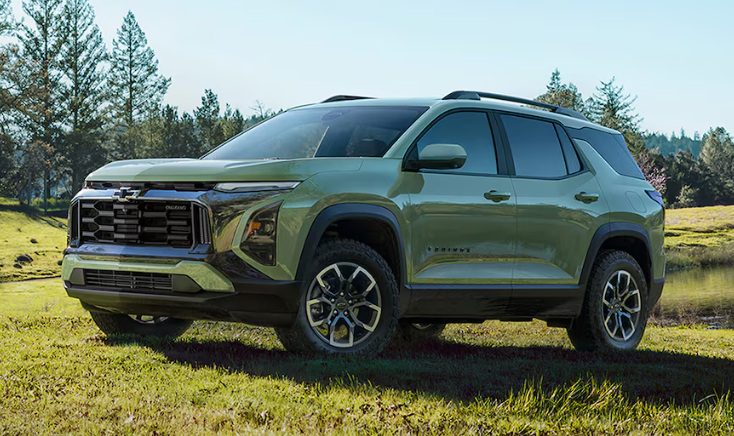
Tire pressure is one of those things most drivers ignore until something goes wrong. But staying on top of it is genuinely one of the easiest ways to protect your Chevy, your wallet, and your safety. Whether you’re hauling gear in a Silverado 1500 or running school drop-offs in a new Equinox EV, knowing the right PSI for your specific model makes a real difference in how your tires perform and how long they last. If you’d rather let a professional handle it, you can schedule a tire service appointment with our team at Turan-Foley Chevrolet Buick.
This guide covers every major 2026 Chevy model, explains where to find your recommended specs, and walks you through what to do when that Tire Pressure Monitoring System (TPMS) light comes on.
Why Correct Tire Pressure Matters for Your Chevy
Running tires at the wrong pressure creates problems that compound quietly over time. An underinflated tire flexes more with every rotation, building heat and wearing rubber unevenly along the outer edges. An overinflated tire rides on a smaller contact patch, reducing grip and chewing through the center tread faster than it should.
Both extremes hurt fuel economy. Tires running below the recommended pressure level can force the engine to burn up to 3% more fuel due to increased rolling resistance. Correct pressure keeps your Chevy handling predictably, braking responsively, and burning fuel efficiently.
Where to Find Your Chevy’s Recommended PSI (Not the Tire Sidewall)
A common mistake is reading the PSI number stamped on the tire sidewall and treating it as the target. That number is the maximum pressure the tire can safely hold, not the pressure your vehicle is designed to run. Inflating to the sidewall max will almost certainly result in overinflation.
Your Chevy’s actual recommended tire pressure lives in two places. First, check the sticker inside the driver-side door jamb, which lists the correct front and rear PSI for your specific model and trim. Second, your owner’s manual covers this too, including any variations for towing or heavy load configurations. Those are the only numbers you should rely on. This guide reflects 2026 baseline specs, so always confirm against your door placard before inflating.
Understanding the Chevy TPMS Warning Light
Every modern Chevy comes with a TPMS. Sensors inside each wheel monitor real-time pressure and alert you when something drops below the threshold. One detail a lot of drivers miss: the TPMS warning light typically doesn’t trigger until you’re around 25% below the recommended PSI. Your tires can be meaningfully underinflated before any warning appears. A monthly manual check with a gauge is really the only reliable way to catch gradual pressure loss early.
When the light does come on, check all four tires with a gauge and inflate accordingly. If it stays on after you’ve corrected the pressure, a sensor may need servicing. Our tire inspection and TPMS service team can diagnose and reset the system during a routine visit.
2026 Chevy Recommended Tire Pressure by Model
The table below reflects Chevrolet’s 2026 baseline specifications. Use it as a quick reference, then confirm your exact PSI on the driver-side door placard or in your owner’s manual.
| Model | Recommended PSI | Notes |
| Trax | 35 PSI | Front and rear |
| Trailblazer | 35 PSI | Front and rear |
| Equinox | 35 PSI | All trims; some trims may allow up to 38 PSI depending on tire size, verify on door placard |
| Equinox EV | 35 PSI | Same as gas model despite EV drivetrain |
| Blazer | 35 PSI | Baseline; confirm trim-specific variation on door placard |
| Blazer EV | 35 PSI | Baseline; confirm trim-specific variation on door placard |
| Traverse | 35 PSI | Front and rear |
| Tahoe | 35 PSI | Base trim: 275mm tires, 55% aspect ratio |
| Suburban | 35 PSI | Front and rear |
| Colorado | 35 PSI | 265mm tires, 70% aspect ratio |
| Silverado 1500 | 35 PSI | Standard load; higher load/towing: confirm on door placard |
| Silverado 2500 | 60-75 PSI | Varies by configuration and payload |
| Silverado 3500 | 60-80 PSI | Varies by configuration and payload |
| Silverado EV | 61 PSI | Elevated due to battery pack weight |
| Corvette (all variants) | 30 PSI | Stingray: 245mm/40%; Z06: 285mm/30%; Stingray Z51 Package: 245mm/35%; all require 30 PSI |
2026 Chevy Tire Pressure Considerations by Model
Compact SUVs: Trax and Trailblazer
Both the Trax and Trailblazer call for 35 PSI across all four tires. Straightforward enough, but the door placard is still the definitive reference since wheel size can vary slightly by trim. Keeping these compact SUVs properly inflated preserves the responsive handling and fuel efficiency they’re built for.
Midsize SUVs: Equinox, Equinox EV, Blazer, and Blazer EV
The Equinox runs at 35 PSI across most trims, though some configurations allow up to 38 PSI depending on tire size. Check your door placard to confirm which applies to your build. The Equinox EV holds the same 35 PSI as the gas model, which surprises some EV owners who expect the battery pack’s added weight to change things. The Blazer and Blazer EV follow the same 35 PSI baseline; verify any trim-specific differences on your door placard.
Full-Size SUVs: Traverse, Tahoe, and Suburban
The Traverse, Tahoe, and Suburban all use 35 PSI as a starting point. The Tahoe’s base trim is fitted with 275mm tires at a 55% aspect ratio. When you’re loading up one of these big SUVs for a road trip, the rear tires absorb more stress, and your owner’s manual may recommend adjusting rear pressure accordingly. Stability at highway speeds depends on tires that are properly inflated, full stop.
Trucks: Colorado, Silverado 1500, Silverado HD, and Silverado EV
Truck tire pressure is where things get genuinely complex. The Colorado uses 35 PSI on 265mm tires with a 70% aspect ratio. The Silverado 1500 also runs 35 PSI under standard load, but towing or carrying heavy cargo can require a different spec. Check your door placard for the load-rated value, which also depends on whether your tires are LT or P-metric.
The Silverado 2500 and 3500 involve a significant jump: 60-75 PSI and 60-80 PSI respectively, depending on configuration and payload. That range is intentional. Heavy-duty trucks are rated to haul and tow substantially more weight, and their tires are engineered to handle it only when inflated to spec.
The Silverado EV runs at 61 PSI, elevated specifically to account for the battery pack’s extra weight compared to gas models. For any Silverado variant, treat the door placard and owner’s manual as required reading before you add air.
Corvette: Stingray, E-Ray, Z06, ZR1, and ZR1X
All Corvette variants call for 30 PSI, despite real differences in tire size across trims. The Stingray uses 245mm tires at a 40% aspect ratio; the Z06 runs 285mm tires at 30%; the Stingray Z51 Package uses 245mm at 35%. Some variants use staggered front and rear sizes, so these spec differences matter when you’re standing at the valve. The E-Ray’s hybrid drivetrain adds weight that factors into the setup as well. With any Corvette, the owner’s manual isn’t optional.
How to Check and Adjust Tire Pressure on Your Chevy
Always check tire pressure when the tires are cold, meaning before driving or after the vehicle has been parked for at least three hours. Driving heats the air inside and raises the reading, giving you a false high number.
Remove the valve cap, press a gauge firmly onto the valve stem, and compare your reading to the door placard. If the tire is low, add air in short bursts and check frequently. If it’s overinflated, press the center pin on the valve stem to release air slowly. Check all four tires and your spare while you’re at it.
One thing worth remembering: even a severely underinflated tire can look perfectly fine to the naked eye. Only a gauge tells you what’s actually going on.
How Often Should You Check Your Chevy’s Tire Pressure
Check tire pressure monthly and before any long road trip. Tires naturally lose about 1 PSI per month under normal conditions, and temperature swings speed that up. For every 10°F drop in ambient temperature, pressure falls by roughly 1 PSI.
This matters especially on the Mississippi Gulf Coast, where summer heat pushes into the upper 90s and seasonal swings are real. Gulf Coast heat causes pressure to rise; cooler months pull it back down. Drivers in the Gulfport area should check monthly year-round and pay close attention during seasonal transitions. Check any time you’re hauling heavier loads than usual too, which applies directly to Silverado and Suburban owners who tow regularly.
Visit Turan-Foley Chevrolet for Tire Pressure and TPMS Service
When to Bring It to Us
Getting tire pressure right on your own is completely doable. That said, some situations really do call for professional attention. If your TPMS light keeps returning after you’ve inflated your tires, a sensor may be failing. Uneven tread wear is another sign that a rotation and pressure reset from a trained technician could extend your tire life significantly. And if you’re not sure which PSI applies to your specific trim, a quick visit removes the guesswork entirely.
Serving Gulfport and the Mississippi Gulf Coast
We serve Gulfport, MS and the surrounding Gulf Coast communities, including Biloxi, Long Beach, and Bay St. Louis. Our factory-trained service team handles tire pressure checks, rotations, full TPMS diagnostics, and sensor replacement using genuine GM parts.
Schedule Service or Contact Our Team
Whether you’re maintaining a new Silverado 1500, a pre-owned Equinox, or a Corvette that needs performance-spec tire care, we’re here to help. Schedule a tire service appointment online, or contact us if you’d prefer to call or message our team directly. You’ll find us at 11123 Hwy 49N, Gulfport, MS 39503.
Connect with us


- July 2026
- June 2026
- May 2026
- April 2026
- March 2026
- February 2026
- January 2026
- December 2025
- November 2025
- October 2025
- September 2025
- August 2025
- July 2025
- June 2025
- May 2025
- April 2025
- March 2025
- February 2025
- December 2024
- November 2024
- September 2024
- August 2024
- July 2024
- June 2024
- April 2024
- February 2024
- January 2024